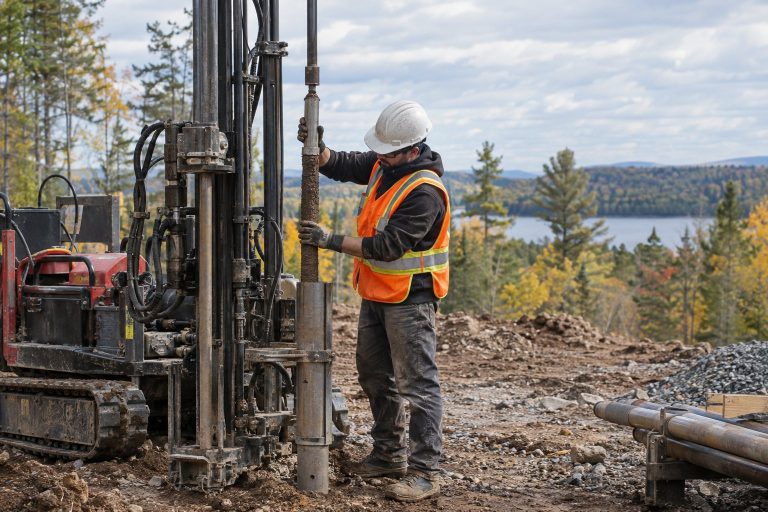
Buying land is a major step. You consider the location, lot size, orientation and view. Sometimes, the most important factor gets overlooked: the soil. Yet what lies beneath your feet will determine the stability of your future home and can have a major impact on construction costs and timelines.
What an attractive lot can hide
A lot may look perfect at first glance yet conceal challenging conditions. Clay soil swells when wet and shrinks when dry, causing movement beneath foundations. A property may also contain fill of uncertain quality or have a high water table that will complicate excavation.
None of this is visible from the surface. A soil assessment before buying land can identify these conditions while there is still time to adjust your project — or negotiate.
What to check before you sign
- Soil type and bearing capacity : can the soil support the planned building, and what type of foundation will it need?
- Groundwater : how deep is the water table, and how will it affect excavation and drainage?
- Depth to bedrock : bedrock too close to the surface can turn a routine excavation into a blasting job.
- Fill material : old, poorly compacted fill is a common cause of settlement.
- Overall ground stability, especially if the property includes a slope or embankment — this is assessed through a slope stability assessment.
Have a property in mind?
Our soil testing and geotechnical investigations reveal what lies beneath the surface before you commit.
How can a geotechnical investigation save you money?
It allows you to revise the plans before work begins. Changing a plan always costs less than repairing a cracked foundation.
Without this information, some homeowners discover problems during construction: delays, last-minute changes and unexpected extra costs. The investigation brings bad news to light while you can still manage it.
What does the process involve?
First, we discuss your project. A team then carries out subsurface investigations on your property, samples are analysed in the laboratory, and you receive a report with specific recommendations. This report supports the project from that point on: it is a resource for your engineer, your contractor and, if needed, your municipality.
Frequently asked questions
Is a geotechnical investigation mandatory?
That depends on municipal requirements and the type of project. Even when it is not required, it is strongly recommended.
When should it be done?
Ideally, before finalizing the foundation plans, or even before completing the land purchase.
Is it useful for a single-family home?
Yes. Soil problems affect small and large buildings alike.
Are neighbouring lots similar?
Not necessarily. Soil composition can vary over just a few metres.
Can I rely on an investigation of the neighbouring property?
No. An investigation is valid for the lot where the subsurface work was carried out. Results from a neighbouring property provide a general indication of conditions in the area, but they do not replace an assessment of your own land.
In summary
Buying land also means understanding its soil. Careful preparation lets you build on solid ground with confidence.
Start off on the right foot
Tell us about the property you are considering. We will explain exactly which assessments are relevant to your situation.